
DeepSeek Uncovered: The Open-Source AI Challenger from the East
The AI race isn’t just about who has the most GPU’s
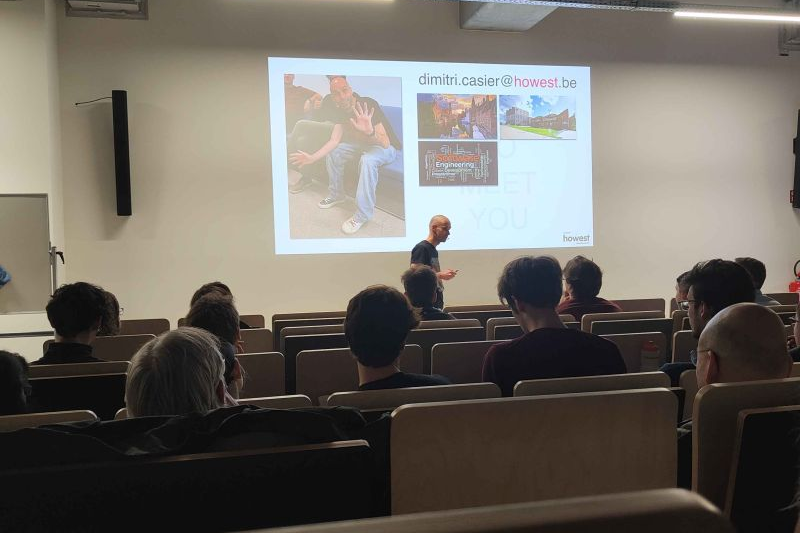
When I saw that Dimitri Casier would be giving a Tech&Meet session about Deepseek, I signed up almost immediately. Dimitri is one of my favourite lecturers, and DeepSeek is the AI model i use most often. So i was curious to learn more about how it works and where it came from.
A surpisingly young company
One of the first things that surprised me was how young DeepSeek is. The company was founded only a couple of years ago and yet it already has become a serious competitor in the AI market.
Dimitri explained that DeepSeek was developed in a very different environment from companies such as OpenAI and Google. Because access to the latest high-end chips is more limited in China, DeepSeek had to focus on using its resources as efficiently as possible instead of simply scaling up computing power.
Smarter use of resources
Something that stood out to me was that instead of activating the entire model for every request, DeepSeek only uses the most relevant part. This reduces the amount of computing power required while still maintaining strong performance.
I found it interesting that DeepSeek’s approach focuses heavily on efficiency. Rather than trying to build the largest possible model, the company looks for ways to achieve similar results with fewer resources. This was definitely a good reminder that innovation is not always about making things bigger.
Reasoning
Dimitri explained that DeepSeek’s R1 model can show parts of its reasoning instead of only providing a final answer. This is what I like so much about using DeepSeek. Because being able to follow how a model reaches a conclusion makes it easier to understand its output and identify mistakes.
Final Thoughts
Before attending the session, I already had a positive opinion of DeepSeek because of my own experience using it. After hearing more about the company’s background and technical approach, I gained a greater appreciation for what they have achieved in such a short period of time.
This session made me realize that innovation isn’t always about having the most money or the biggest servers. Sometimes it’s about working with less and being forced to get creative.
I really liked the live demos of DeepSeek’s capabilities in reasoning, code generation, and multimodality.
As always, Dimitri managed to explain complex topics in a way that was easy to follow and engaging to listen to. The session showed that success in AI is not only about having the most resources, but also about finding smarter ways to use them.
Overall, it was an interesting session that gave me a better understanding of both DeepSeek and the broader AI landscape.